Guides
How Colorado water law works
First in time, first in right: the seniority system, the water courts, and the compacts that govern every drop in the state.
DENVER

In Colorado, water law is not an abstraction. It decides who gets to irrigate, who gets to drink, and what happens when the river runs low. The system predates statehood, it is written into the state constitution, and it still governs nearly every drop of water in the state.
The core idea is prior appropriation, usually summarized as first in time, first in right. The first person to take water from a stream and put it to a beneficial use holds the senior right, and in a shortage the seniors get their full share before junior rights get any water at all. Rights are ranked by the date they were established, not by who owns the land beside the stream.
Colorado wrote this system into its constitution in 1876: the water of every natural stream is the property of the public, dedicated to the people's use, subject to appropriation for beneficial uses. The state supreme court cemented the doctrine in Coffin v. Left Hand Ditch Co. in 1882, rejecting the eastern riparian rule, under which landowners beside a stream could claim its flow. In an arid state, the court reasoned, water had to go to whoever put it to use first.
The water courts
Water rights are not permits handed out by an agency. They are confirmed by decree in one of Colorado's seven water courts, one for each major river basin: the South Platte, the Arkansas, the Rio Grande, the Gunnison, the Colorado, the Yampa-White-North Platte, and the San Juan-Dolores. A decree specifies how much water can be taken, where, for what use, and with what priority date. Appeals go directly to the state supreme court, skipping the court of appeals.

Two rules make the system bite. The first is beneficial use: a right has to be exercised for a recognized use, or it can be lost. The second is administration. The state engineer enforces the priority system through division engineers and water commissioners, who can order junior users to stop diverting when senior rights call for their water in a dry year. When a ditch company upstream shuts its headgate because a senior called, that is the system working as designed.
The interstate layer
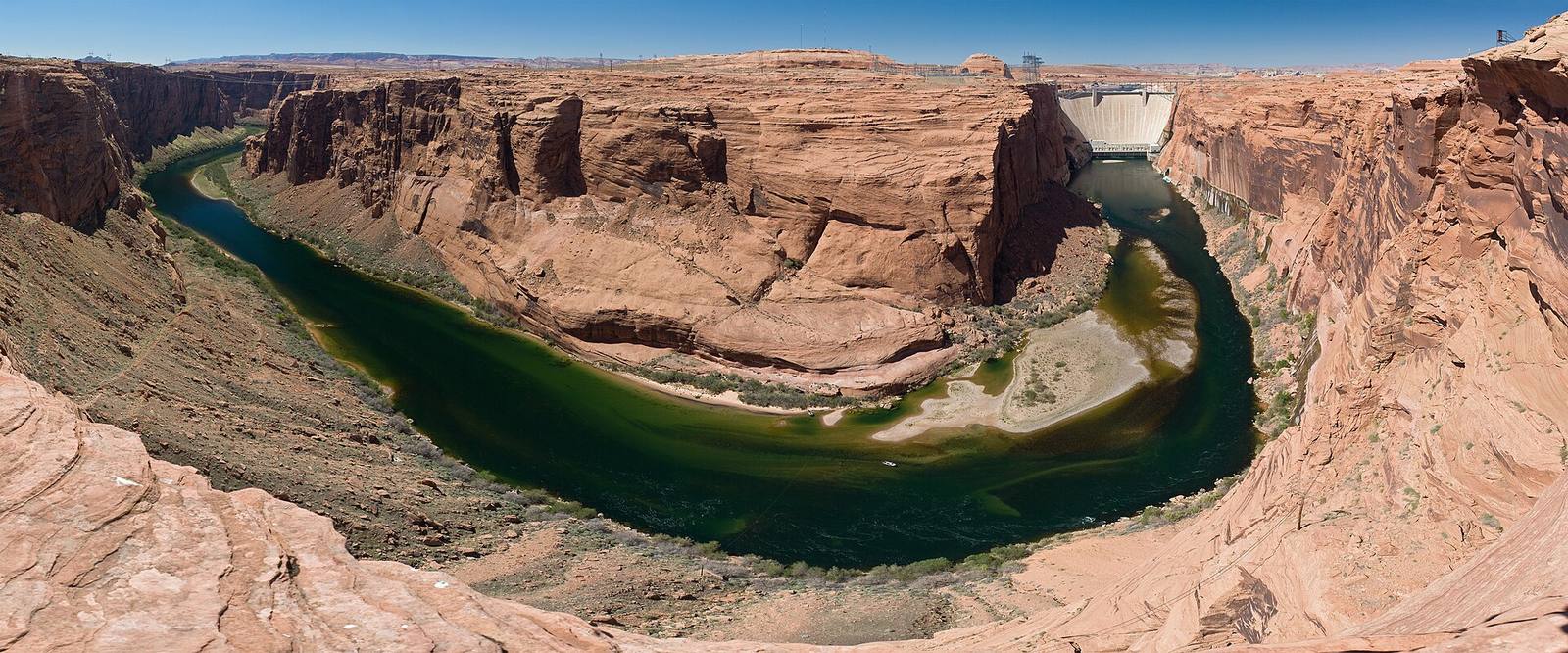
Colorado's rivers do not stop at the state line. Rivers that begin in Colorado's mountains supply cities and farms across the West, and the state's share is constrained by interstate compacts, including the 1922 Colorado River Compact, along with federal law and court decrees. This is why Colorado water news rarely stays local: a negotiation over reservoir levels in Arizona can reach back into a Western Slope irrigation district.

One legacy shapes the Front Range in particular: transmountain diversions. Many Front Range cities move water across the Continental Divide from the Western Slope through tunnels and pipelines built in the mid-20th century. Denver's taps draw partly on water that fell as snow on the other side of the mountains, which is why water politics in this state always runs on two tracks, one for each side of the Divide.
For newcomers, the practical takeaway is simple: in Colorado, water is property, it is adjudicated in court, and seniority is what matters. Everything else, the compacts, the diversions, the calls on a dry August afternoon, follows from that.
More guides
- Front Range vs Western Slope, explained2026-09-29
- A newcomer's guide to Denver2026-09-29
- How the state legislature works2026-09-29