Wildfire
Five years after the Marshall Fire, the lawsuits outlast the smoke
The Dec. 30, 2021 fire killed two people and destroyed more than 1,000 buildings. This year, Xcel settled a major lawsuit just before trial as the fifth anniversary approaches.
SUPERIOR
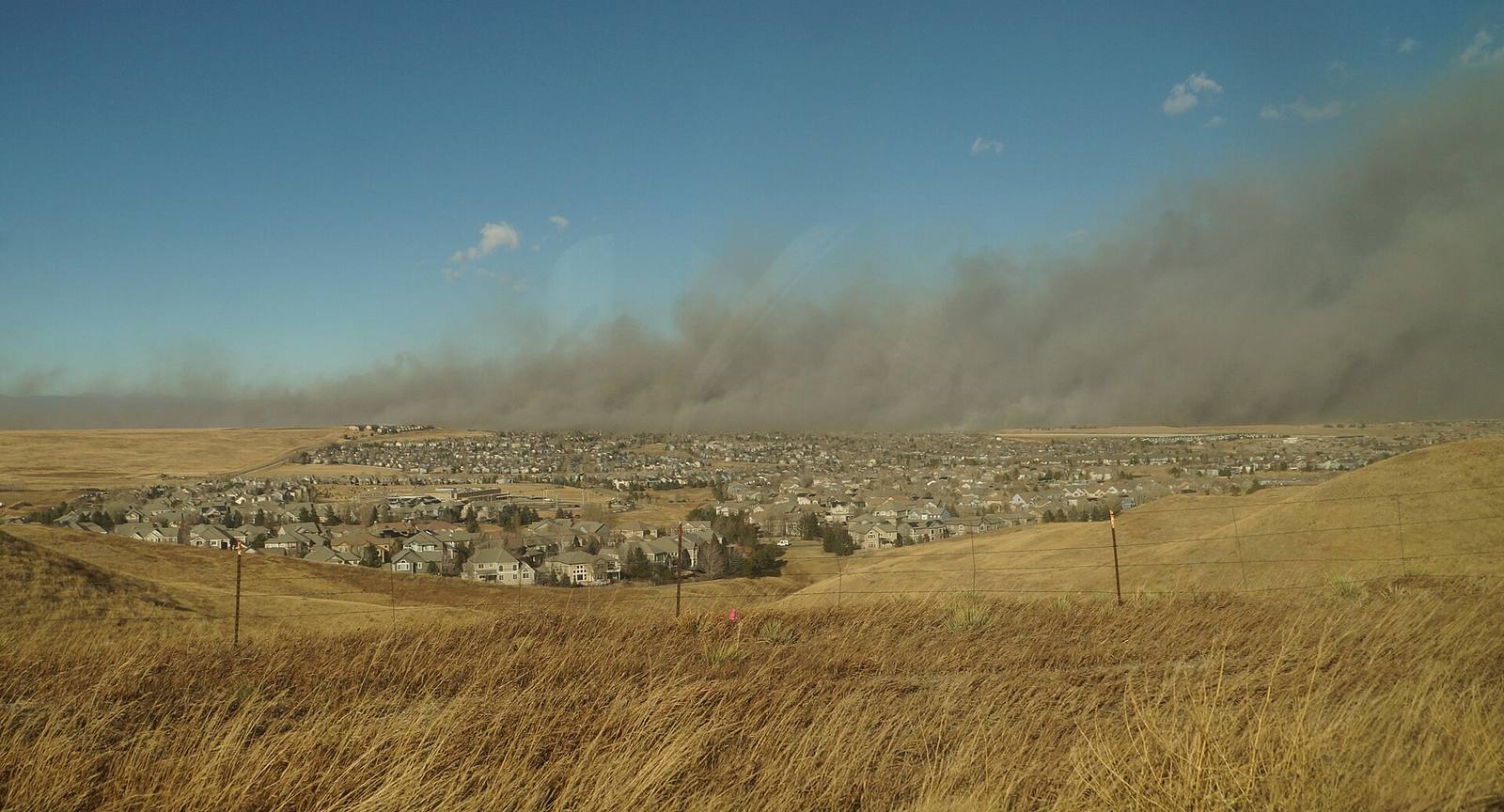
Five years ago this December, a grass fire driven by hurricane-force winds did what no Colorado wildfire had done before: it burned through suburbs. The Marshall Fire, which ignited the morning of Dec. 30, 2021, killed two people, destroyed more than 1,000 homes and businesses across Superior, Louisville and unincorporated Boulder County, and caused more than $2 billion in property damage, according to an estimate from the state insurance commissioner. It remains the most destructive wildfire in state history.
Investigators determined the fire began as two separate ignitions about 2,000 feet apart. The first started on property associated with the Twelve Tribes religious group, where residents had burned material on Dec. 24, let it burn down to coals and covered it with dirt; winds gusting to 115 mph uncovered still-smoldering embers on Dec. 30 and sprayed them into dry grass. The second, known as the Trailhead Fire, started near the Marshall Mesa trailhead in South Boulder. Investigators and experts hired by the Boulder County Sheriff's Office concluded the most probable cause was hot particles discharged from Xcel Energy power lines, though they could not completely rule out an underground coal fire that had smoldered in the area, possibly for a century.
No criminal charges were ever filed. Boulder County District Attorney Michael Dougherty said there was insufficient evidence to prove a crime beyond a reasonable doubt, either against the property owners where the first fire started or against Xcel. Investigators found the poles, conductors and insulators near the second ignition in good condition and no evidence of criminal recklessness in the system's design or maintenance. Dougherty said it was more likely than not that the extreme winds caused a line to disconnect and throw sparks when it struck other lines. Xcel, Colorado's largest electric utility, has steadfastly disputed that its equipment played any role.
The civil cases told a different story, under a lower standard of proof. Hundreds of residents, businesses, Boulder County and insurers filed claims alleging that power and telecommunications equipment caused the Trailhead Fire and its destruction, accusing Xcel and two telecom companies of negligence. Thousands of plaintiffs, including survivors, insurers and Boulder County, contended Xcel should be liable for collective damages that could exceed a billion dollars. Last September, on the eve of a liability trial in Boulder County District Court, Xcel agreed to a $640 million settlement with the plaintiffs and two telecommunications companies, without admitting fault, one more chapter in a docket that has kept the fire in courtrooms nearly as long as it has been out of them.

The fire also rewrote Colorado's understanding of wildfire risk. It was not a forest fire but a grass fire in a developed landscape, driven by an extraordinary wind event after a long dry spell, and it moved faster than evacuation orders could keep up. Tens of thousands of people fled Superior, Louisville and unincorporated Boulder County in a single afternoon; by nightfall, snow was falling on the burn scar. Utilities across the West took note: the investigation became a case study in the growing risk to power companies and their customers as the region dries and heats.
In the burn area, rebuilding has continued lot by lot, and the fifth anniversary this December will be marked in neighborhoods that look new but remember. The lawsuits are mostly settled or grinding toward resolution. What endures is the lesson the Marshall Fire taught in a single afternoon: in Colorado, wildfire season no longer belongs to the mountains, and no suburb is far enough from the grass.